Colonialism
Your great-grandparents experienced it silently - but you should talk about it

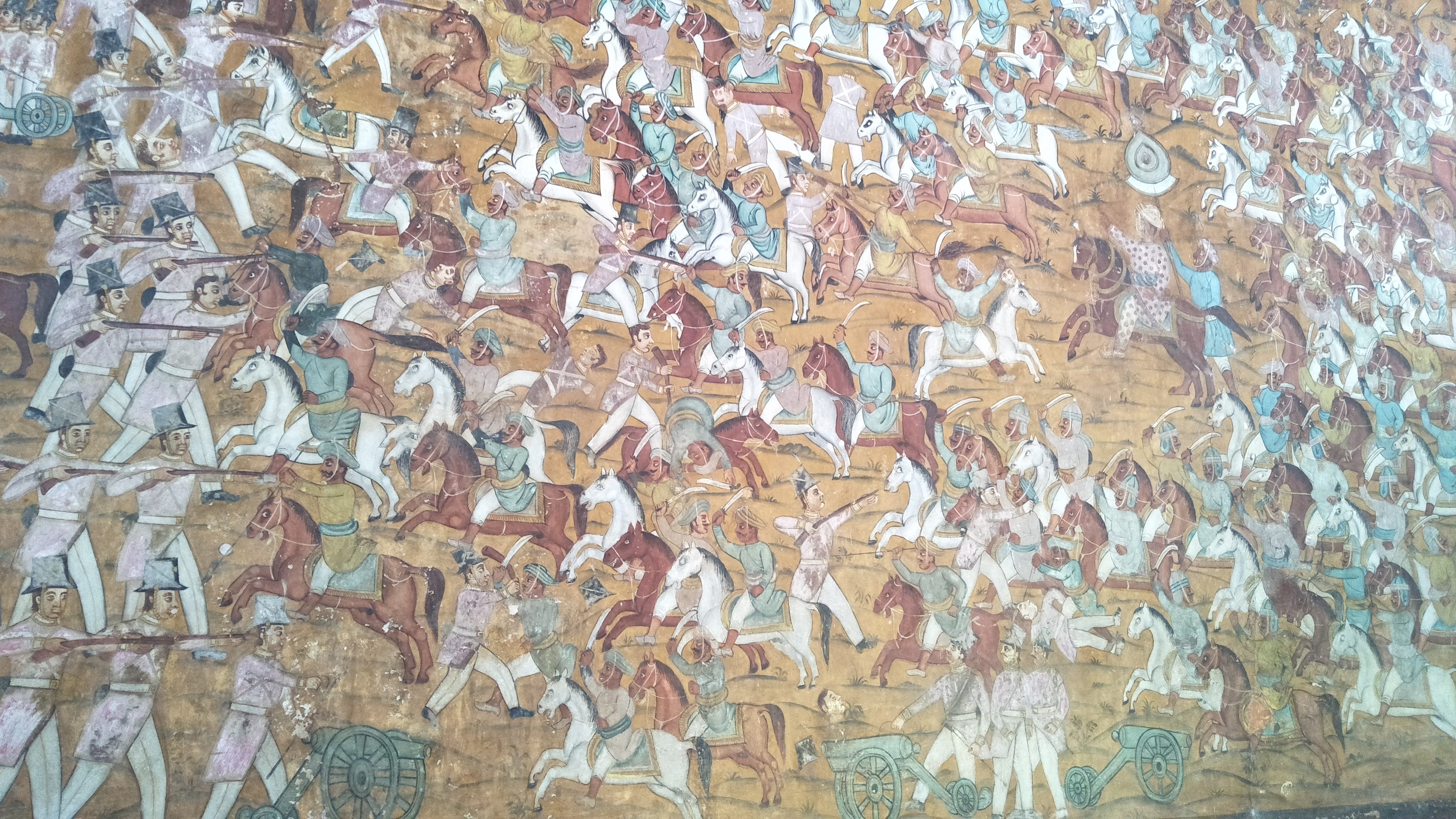
Catchy title no? Its true. Colonialism still exists, and its not something to be observed silently. Our ancestors may have done so, but to them the practice was quite new. This piece is not academic, but a thoughtful walkthrough of a slice into the process of colonialism.
The British were just another ruling class at first. They came in as traders, who then displaced the political elite class and carried on with their ruling powers. Resistance was almost always when your rights on what you held to be ‘granted’ were threatened.
If you told a landholder or upper caste person in the 1830s that they were being ‘colonised’ they would first ask you what that meant. ‘You mean that angrezi in the big house or inside the kotte is taking advantage of me? What, too much hasheesh you’re smoking. That white man is giving me business!’. The white man was definitely beneficial to the dominant groups.
And its true. migrating to cities got you new kinds of jobs. Ones that paid much higher. you could go back home a hero and call more people to join you. As for the ruling classes, they entered into deals with the East India Company, and later the British government. It made no difference to the labouring poor or the small landholders: when the census taker came later, they gave him the details requested, suspiciously or openly, and carried on with life. The landless poor and those outside heirarchies of caste and society anyways had no say in the change of power.
It couldn’t go on forever. We all know that nationalism, which is not the same as emancipation, happened when some people from the subcontinent (and some from the UK) happened to start piecing together the invisible lines and connected the bubbly dots to say: “Hold up!” in the late 19th century. In a way, it was a continuation of re-establishing known patterns of dominance. This had happened before in the 18th and 19th centuries: those who had grown up used to a particular kind of monarch, whether that was Tipu Sultan in Mysore, a Palayam Raja (like in Sivagangai), the Nawab of Awadh, or even the Mughal Sultan, decided to ‘go back to the way things were’. And so happened the Vellore mutiny of 1807 to re-throne Tipu’s children; Velu Nachiar’s successful take-back in 1773 of the Sivagangai kingdom; and the events of 1857, which as Indians we have all studied and know what its about. Movements against colonial rule were initially, in a sense, conservative: the people were looking to reinstate the familiar, not re-make life in a better way.
The ‘benefits’ of colonialism touched thousands of people on the upper levels of society and its effects are seen to this day: English education, government jobs (that brought stable incomes), a social standing and ability to get ahead in life. Lands and titles were an added bonus. But these benefits only reached a ‘chosen few’ and by privileging them above the rest of population, made them willing allies.
What the ancestors benefitting from colonial rule chose not to see was that many of those not already socially well-off had to suffer worse: travelling overseas to be indentured labour, working to serve colonial interests in the fields at home, seeing their social position in rural locations become stratified as the British allied with the upper-castes, and become a part of an invisible power-play, that colonialism is at its root. Even to those that moved to the city, not everyone would be lucky enough to be housed and clothed by the Company or the Maharaja.
Colonialism cut down opportunities to those who weren’t already allies to the British and it promoted civilisational myths, dividing people against each other. ‘Muslims’ as a group were barbarians and conquerors while Hindus were peaceful (and mostly subservient and ignorant), an ancient civilisation. Sikhs and Jats were ‘martial races’ while tribal groups that ‘wandered’ were a menace that had to be dealt with. To say nothing of created famines and droughts that badly affected the rural populations more severely than urban ones.
Colonialism, if you haven’t seen it yet, is not a concrete visible phenomena. It was a form of imposed superiority that meant that knowledge was controlled. It also promoted an individualism and narrow point of view that nationalism attempted (partly) to break by creating a ‘pan-Indian-ness’. Of course, these nationalist leaders were still bogged down by their own personal points of view and creating egalitarianism was never possible.
The British officially left India (partitioned as a parting gift, of course) in 1947. But did colonisation end?
Some people still live under colonial forms of rule, whether here or in other parts of the world. The name of the game and the way it is played has changed. The fact did not. Today, treaties and the world system impose an order that retains the basic tenets of colonialism - divisiveness, a heirarchy of peoples and control of resources.
If your great-grandparents benefitted from colonial rule, you are where you are today because of it. But that doesn’t meant you have to support it. Hindsight may not change the past, but it gives us a fresh perspective on how to deal with what has been left behind. In today’s world, the tools and the knowledge to recognize injustices and oppression are more available than ever. All it takes are an open critical mind, to see them.